
Yamas NiYamas

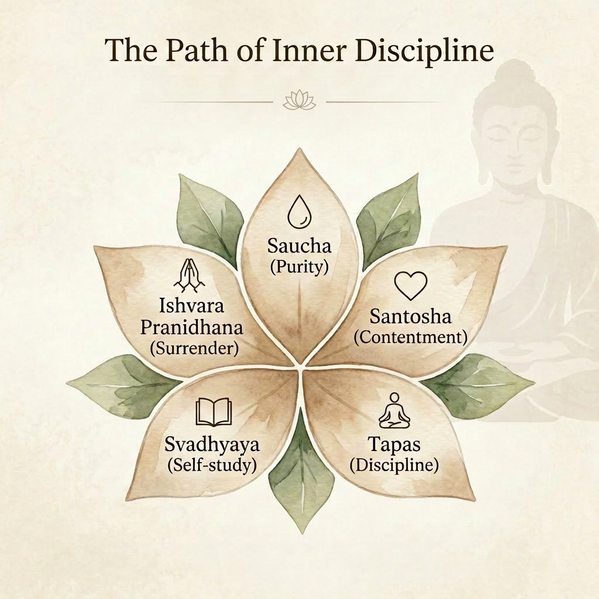
These terms originate from Patanjali’s teachings on yoga. Patanjali was an Indian scholar who, some 2,000 years ago, summarised the fundamentals of
classical yoga in the YOGA SUTRAS. In them, he outlines a clear path for how people can calm their minds and lead a more balanced and mindful life. Similarly, he points the way to
overcoming the hardships of human suffering.
Part of this path consists of the Yamas and Niyamas, which serve as a simple guide for interacting with others and with oneself.
Yamas = “Be kind to others”
Niyamas = “Be kind to yourself”
Yamas = how you behave towards others
Niyamas = who you are on the inside
Why all this?
These rules are not an obligation, but rather:
- a kind of compass for life - to help you become calmer, clearer and more content
Yamas = How you treat others
Niyamas = How you treat yourself
5 simple rules for how you behave towards others -
Yamas - “This is how you relate to the world”
1. Ahimsa (Non-violence)
Be kind; do not hurt anyone, either with words or actions → for example, do not insult others, do not cause harm intentionally
2. Satya (Truthfulness)
Be honest → but: honest AND kind
3. Asteya (Non-stealing)
Do not take anything that does not belong to you → (this also applies to time, ideas or attention)
4. Brahmacharya (Moderation)
Do not overdo it – whether in food, work or consumption → balance rather than ‘too much of everything’
5. Aparigraha (Non-attachment)
Not wanting to possess or cling to everything → learning to let go
5 simple rules for how to treat yourself -
Niyamas – “This is how you treat yourself”
1. Sauca (Purity)
Order and clarity – in body and mind → for example, keeping things clean, having clear thoughts
2. Santosha (Contentment)
Being satisfied with what is → not constantly seeking “more, better, different”
3. Tapas (Discipline)
Persisting, even when it’s difficult → for example, doing sport, pursuing goals
4. Svadhyaya (Self-study)
Understanding yourself better → Why do I think/feel this way?
5. Ishvara Pranidhana (Trust / Surrender)
Tener confianza en la vida → no querer controlar todo